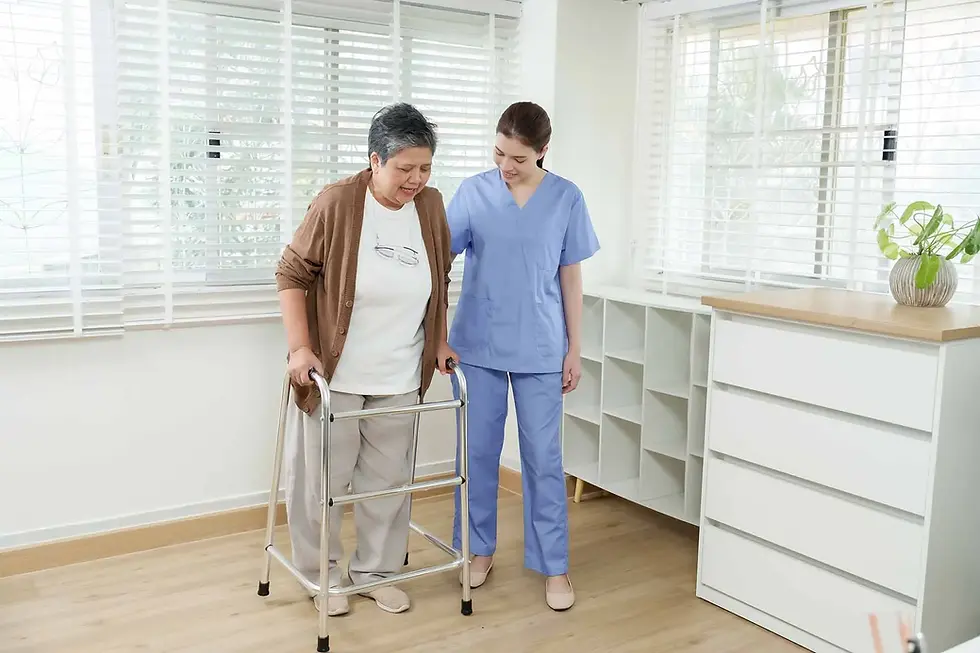
How Physiotherapy Supports Each Stage of Parkinson’s
Updated: Apr 21

Parkinson’s is a condition that changes gradually over time, and no two people experience it in exactly the same way. Because of this, physiotherapy treatment for the condition is not a generalised approach. Instead, it adapts to the individual and to the stage of the condition. The aim is always the same: to help people stay active and independent for as long as possible. With the right guidance, movement can remain a positive part of daily life throughout the journey.
Understanding the Early Stage of Parkinson's
In the early stage of Parkinson’s, symptoms are often mild. People may notice slight changes in balance, stiffness on one side of the body or a small reduction in arm swing when walking. At this point, physiotherapy focuses on maintaining mobility and building strength before these changes start to affect daily life.
Sessions often include exercises that improve posture, flexibility and coordination. Activity levels are reviewed, and we work with people to find enjoyable forms of regular exercise that support long-term brain and physical health. Early physiotherapy can also help people understand what to expect and how to manage symptoms if they progress. Starting at this stage builds confidence and encourages positive habits that support independence in the years ahead.
Supporting the Middle Stage of Parkinson’s With Physiotherapy
As the condition progresses, people may experience more noticeable symptoms. Walking can feel slower, turning may become harder and balance can be less reliable. This stage is when physiotherapy becomes even more important, as movement patterns need closer attention.
A physiotherapist will work on improving step length, rhythm and walking speed. Techniques such as cueing, which use visual or auditory prompts to guide movement, can be especially helpful. Strengthening exercises become more targeted, often focusing on the legs, hips and trunk to improve stability and reduce the risk of falls. We also spend time practising everyday movements such as getting up from a chair, rolling in bed, managing stairs and turning safely. These skills make a real difference to daily independence.
Family members and carers may be more involved at this stage, and physiotherapists can offer guidance on supporting safe movement at home without taking away a person’s independence.
Physiotherapy in the Later Stage
In the later stage of Parkinson’s, mobility can become more limited and people may need support with transfers, standing or short periods of walking. Physiotherapy at this stage focuses on maintaining comfort, reducing stiffness and helping people move in the safest and most efficient way possible.
Sessions may include gentle range-of-movement work, supported strengthening and strategies for easier transfers. Breathing exercises can also be useful, as posture and reduced mobility can affect respiratory function. If a person finds it difficult to leave their home, physiotherapy delivered in a familiar environment can offer reassurance and practical solutions tailored to their daily routines.
The goal in the later stage is not to push for unnecessary physical demands but to preserve comfort, dignity and quality of life.
The Importance of Ongoing Support
Parkinson’s changes over time, and physiotherapy changes with it. Regular reviews allow exercises and strategies to be adjusted so they continue to meet a person’s needs. Beyond the physical benefits, many people find that physiotherapy offers a sense of routine, reassurance and encouragement, helping them stay engaged with movement even when symptoms fluctuate.
How We Can Help With Parkinson’s Physiotherapy
To find out how we can support people living with Parkinson’s through Parkinson’s physiotherapy, including neurological physiotherapy, home visit physiotherapy, or care home visits, contact SMARTPHYSIO to discuss the most appropriate support at each stage of the condition.