Why Gait Quality Matters More Than Speed In Stroke Recovery And How Physiotherapy Helps
- SMARTPHYSIO
- Jan 29
- 3 min read
Updated: Apr 21

When someone is recovering from a stroke, walking again is often a major goal. Many people assume that walking faster or longer distances is the main measure of progress. While speed is important, physiotherapists know that gait quality, or how someone walks, is far more crucial for long-term recovery, safety and independence. At SMARTPHYSIO, we focus on helping stroke survivors rebuild confident, efficient, and functional walking patterns, not just quick steps.
Why Walking Can Be Challenging After A Stroke
After a stroke, the brain and body have been disrupted in ways that affect movement, coordination and balance. Weakness, spasticity, altered muscle tone and sensory impairments can all contribute to an uneven or inefficient gait. Common issues include:
Reduced stride length or asymmetrical steps
Difficulty lifting the foot (foot drop)
Limited arm swing or poor trunk rotation
Slower reaction times when turning or navigating obstacles
These changes may not just slow walking speed; they can increase the risk of trips and falls, cause joint strain or lead to compensatory movement patterns that make daily activities harder over time.
Why Gait Quality Matters More Than Speed
Walking faster may seem like progress, but a fast gait that is uncoordinated or unstable can be unsafe. Quality of movement ensures that each step is controlled, symmetrical and functional, reducing the likelihood of falls and secondary injuries.
Improving gait quality also supports other aspects of recovery:
Better balance and posture
Improved endurance and efficiency
Reduced pain and musculoskeletal strain
Increased confidence to perform daily activities
Focusing on gait quality helps stroke survivors regain independence and perform real-life tasks more safely, rather than just walking longer or faster in a controlled environment.
How Physiotherapy Helps Improve Gait Quality
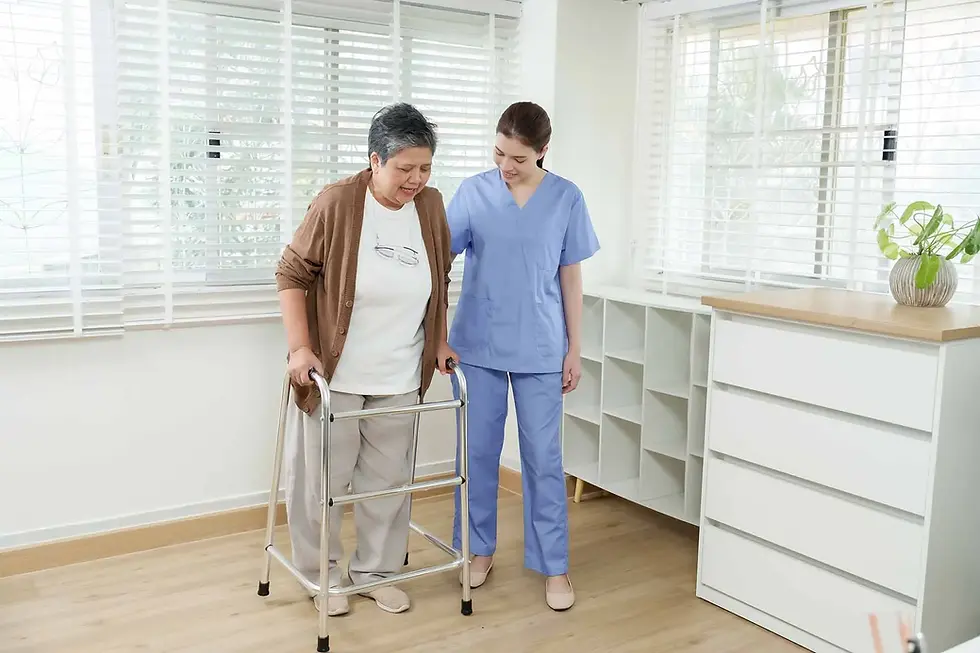
Physiotherapy after a stroke is designed to retrain the brain and body to work together efficiently. At home or in a clinic, our therapists use a combination of strategies:
Targeted Strength And Mobility Exercises
Improving muscle control, joint range and core stability supports smoother, more coordinated walking.
Task-Specific Gait Training
Therapists work with patients on activities that mimic real-life situations, such as walking on different surfaces, climbing stairs, or turning safely.
Feedback And Cueing
Visual or verbal cues help patients correct patterns, promote symmetry and improve timing. Mirrors, markers on the floor, and therapist guidance are used to reinforce learning.
Neuroplasticity Principles
Repetition and functional movement help the brain reorganise pathways and adapt to the changes caused by the stroke. Each carefully planned step strengthens the brain-body connection and improves automatic movement control.
Practical Tips To Support Recovery At Home
Even outside sessions, patients can focus on quality over speed:
Practice controlled stepping in hallways or corridors
Break longer walks into shorter, deliberate segments
Focus on posture, foot placement and arm swing
Use simple markers or cues at home to guide safe movement
Keep a diary of progress, noticing improvements in stability is as important as distance covered
Consistency and mindfulness of movement are key to long-term success.
The Benefits Extend Beyond Walking
Focusing on gait quality also boosts confidence and reduces fear of falling, which can be a major barrier to independence after a stroke. Patients often notice that improving their walking patterns improves other daily activities, from getting out of a chair to climbing stairs or reaching for items safely.
How We Can Help with Stroke Rehabilitation
Physiotherapy can play a key role in supporting recovery after a stroke by improving gait quality, balance, and confidence. We provide expert care through neurological physiotherapy, physiotherapy, and home visit physiotherapy, supporting patients both in clinic and at home across London. If you or a loved one is recovering from a stroke and would benefit from personalised rehabilitation, contact the team today to arrange an appointment.