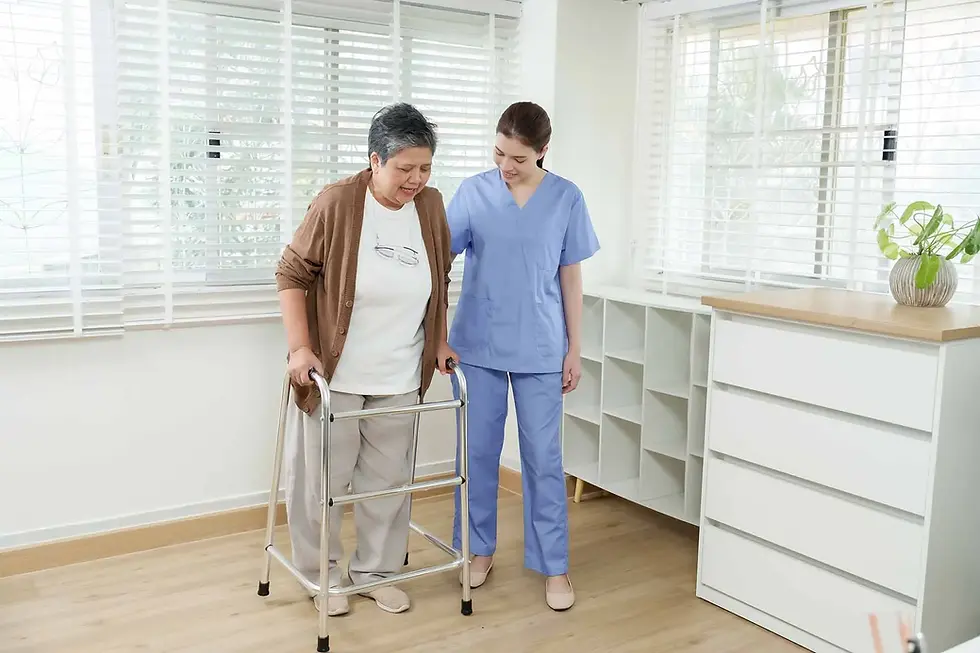
Stroke Rehabilitation at Home in London: How Neuro Physiotherapy Supports Recovery After Hospital Discharge

Leaving hospital after a stroke is a significant moment. It can also be a disorienting one. Many people return home still needing support with walking, balance, transfers, fatigue, and the basic tasks of daily life. The shift from a clinical environment to home often happens faster than families expect, and the rehabilitation work that matters most is frequently still ahead.
Home-based neuro physiotherapy can bridge that gap, offering structured, expert support at a point when travelling to a clinic may be exhausting or simply not yet safe.
The gap between hospital and home
Stroke rehabilitation does not end at discharge. Hospital-based therapy is often focused on stabilisation and meeting basic thresholds for safe discharge. That is entirely appropriate, but it means many people arrive home still significantly affected.
Fatigue alone can be underestimated. A short walk that felt manageable in a hospital corridor may feel very different at home, where there are stairs to manage, a bathroom some distance from the bedroom, and no nurse call button. Family members who are suddenly taking on a carer role may also feel underprepared. This is not a reflection of poor hospital care. It is simply the nature of stroke recovery, which unfolds over weeks and months rather than days.
Can stroke rehab be done at home?
Yes. Home-based stroke rehabilitation is not only possible but is often the most practical and appropriate starting point after discharge. A qualified neuro physiotherapist can assess and treat a patient in their own environment, where the real functional challenges actually exist.
Home stroke rehab may include:
Mobility and walking practice within the home
Balance exercises relevant to real surfaces and spaces
Transfer practice, such as moving from bed to chair or in and out of a car
Strengthening work tailored to current ability
Gait retraining to improve walking pattern and safety
Advice for family members or carers supporting daily movement
Fatigue management strategies
For many people, this kind of home visit physiotherapy in London is the right first chapter of recovery, even if clinic-based sessions become part of the picture later on.
What does a neuro physiotherapist do after a stroke?
A neuro physiotherapist specialises in conditions affecting the brain and nervous system, including stroke, Parkinson's disease, and multiple sclerosis. After a stroke, their role goes well beyond general exercise prescription.
During an initial assessment, they are likely to look at:
Strength and movement on the affected side
Balance in sitting, standing, and during movement
Walking pattern, including foot drop or asymmetry
Posture and its effect on movement
Transfer ability, getting in and out of bed, chairs, and the bath or shower
Fatigue levels and how they affect function
Cognitive and emotional factors that may influence progress
The home environment itself, including layout, furniture, and potential hazards
From there, treatment is built around realistic, individual goals. Someone who is not yet safe on stairs will work towards that. Someone who has lost the confidence to walk independently to their front door will work towards that too.
Neuro physiotherapy after stroke draws on the principle of neuroplasticity: the brain's ability to adapt and form new connections in response to repeated, purposeful activity. This is why repetition matters, and why the exercises prescribed are rarely arbitrary.
Practical goals in the early weeks
Abstract goals are not particularly useful to someone who has just come home from hospital. In practice, early home rehab tends to focus on specific, meaningful tasks.
Getting from the bed to the bathroom more safely. Standing up from a low sofa without assistance. Walking from the kitchen to the living room with more confidence. Managing three steps up to a front door. Building enough stamina to sit at the table for a full meal. These are not small things. For many people, achieving them independently again is the central goal of the weeks following discharge.
Progress in stroke recovery physiotherapy is rarely linear. Some improvements come quickly, particularly in the early weeks as the brain begins to reorganise. Others take longer, and some days will be harder than others. Fatigue, mood, and confidence all shape how someone responds to rehab on any given day, not just physical strength. Acknowledging this honestly tends to be more useful than relentless positivity.
How do you regain walking after a stroke?
Walking recovery after stroke typically involves a combination of gait retraining, strength work, and balance practice, delivered progressively as ability improves. Gait retraining means working specifically on the pattern and mechanics of walking, including weight shifting, step length, foot placement, and coordination between the two sides of the body.
A physiotherapist may use parallel bars, walking aids, or specific weight-bearing exercises depending on where someone is in their recovery. The aim is not simply to walk a certain distance but to walk more safely and with less effort. The NHS outlines the range of factors involved in stroke recovery, including physiotherapy as a core component of regaining movement and function.
It is worth being clear that walking recovery is highly individual. Some people regain independent walking within weeks. Others work towards it over many months. Both are within the range of what is possible with consistent, appropriate rehabilitation.
Who benefits most from home rehabilitation?
Home rehab after stroke tends to be particularly well suited to older adults, people who live alone, those still in the early weeks after discharge, and anyone for whom travel is genuinely tiring or impractical.
Many enquiries to our team come from family members rather than the patient directly. A son or daughter trying to understand what support is available for a parent who has just come home from hospital. A partner unsure how to help safely with transfers. This is very common. A neuro physiotherapist who visits at home can work with the patient and guide carers at the same time, which often makes a real practical difference.
For patients with additional complexity, for example those with Parkinson's disease alongside stroke, or older adults managing multiple conditions, elderly care physiotherapy support at home can be especially valuable.
When does clinic-based rehab become relevant?
Home visits are often the best starting point, but they are not always the final destination. As recovery progresses, some patients benefit from access to clinic equipment, more space to practise walking and balance, and the psychological shift of being out in the world again.
SMARTPHYSIO has four London clinic locations: our West End physiotherapy clinic near Charing Cross Road, our Highgate physiotherapy clinic on Archway Road, our Hampstead physiotherapy clinic on Finchley Road, and our City physiotherapy clinic at Liverpool Street. For patients who begin with home visits and are later ready for clinic-based sessions, a transition between the two is straightforward.
The Chartered Society of Physiotherapy provides useful guidance on what to expect from physiotherapy after stroke, which may be helpful for patients and families exploring their options.
How We Can Help with Stroke Rehabilitation at Home
Stroke recovery takes time, consistency, and the right support at the right stage. SMARTPHYSIO has more than 30 years of experience working with neurological conditions, stroke recovery, and post-discharge rehabilitation across London. Led by Sammy Margo, our team includes specialist neuro physiotherapists who provide both home visit physiotherapy and clinic-based care, depending on where each patient is in their recovery.
Whether you are looking for support for yourself or for a family member who has recently come home from hospital, we are here to help. We offer stroke physiotherapy support in London through home visits and across all four of our clinic locations.
If you would like to discuss what rehabilitation might look like or arrange an initial assessment, please contact the team to book an appointment. We are happy to advise on the most appropriate starting point.
Frequently Asked Questions (FAQs)
How soon after a stroke can physiotherapy start at home?
Physiotherapy can often begin at home shortly after hospital discharge, sometimes within days. The timing depends on the individual's medical stability and the nature of the stroke. Early intervention is generally recommended, as the brain is particularly responsive to rehabilitation in the weeks following a stroke.
What is the difference between a neuro physiotherapist and a general physiotherapist?
A neuro physiotherapist has specialist training in conditions affecting the brain and nervous system, including stroke, Parkinson's disease, and multiple sclerosis. After a stroke, they can assess and treat the specific movement, balance, and coordination challenges that arise from neurological damage, rather than simply addressing muscle or joint problems.
Can balance be restored after a stroke?
Balance can often be significantly improved through targeted physiotherapy after stroke. A neuro physiotherapist will assess both static and dynamic balance and design exercises to challenge and retrain the systems involved. Progress varies between individuals, but consistent balance work is an important part of most stroke rehabilitation programmes.
Will I need to travel to a clinic for stroke rehabilitation, or can a physiotherapist come to me?
A physiotherapist can visit you at home, which is often the most appropriate option in the early weeks after discharge. Home visits allow the therapist to work within the environment where the real challenges exist and to advise carers directly. As recovery progresses, clinic-based sessions can be introduced where that is useful or preferred.