Falls Prevention Physiotherapy in London: How Balance Treatment Helps Older Adults Stay Independent
- SMARTPHYSIO
- Apr 6
- 6 min read

For many older adults, unsteadiness does not arrive all at once. It tends to creep in gradually. Perhaps furniture becomes something to hold on to when crossing the room. Stairs feel less certain. Turning quickly indoors produces a moment of hesitation. Then one near-fall changes everything, and confidence drops faster than physical ability.
Falls prevention physiotherapy addresses exactly this: the combination of physical change, fear, and reduced activity that can quietly narrow an older person's world. With the right assessment and a tailored plan, many people can improve their balance, reduce their falls risk, and regain real confidence in everyday movement.
What Causes Balance Problems in Older Adults?
Balance problems in older adults can stem from several overlapping causes including muscle weakness, slower reaction times, reduced sensation in the feet, joint pain, medication side effects, neurological changes, and declining confidence. Dizziness is one possible factor, but many people who feel unsteady do not experience true dizziness at all.
Common contributing factors include:
Reduced muscle strength, particularly in the legs and core
Slower postural reflexes and reaction to movement
Joint stiffness or pain affecting walking pattern
Changes in vision or proprioception (the body's sense of where it is in space)
Neurological conditions such as Parkinson's disease or the after-effects of a stroke
Vestibular problems affecting the inner ear
Fear and avoidance following a previous fall or near-fall
When neurological conditions are involved, balance decline can be more complex. Conditions such as Parkinson's affect gait, posture, and movement initiation in specific ways. Neuro physiotherapy in London addresses these patterns directly, as does Parkinson's physiotherapy support and stroke physiotherapy for those managing the longer-term effects of a cerebrovascular event.
Can a Physiotherapist Help with Balance Problems?
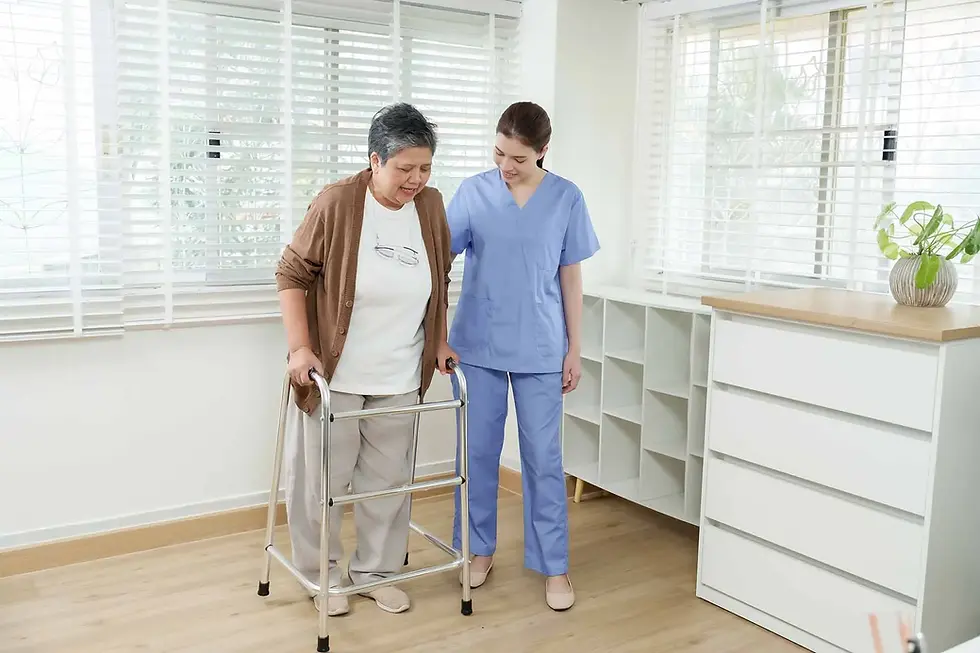
Yes. A physiotherapist can assess the specific causes of an older adult's unsteadiness and design a treatment plan to address them. This might involve strength and balance training, gait retraining, transfer practice, and guidance on managing everyday movement more safely. The goal is to reduce falls risk while rebuilding confidence and functional independence.
A falls prevention assessment typically examines:
Walking pattern, speed, and steadiness
Standing balance on both stable and unstable surfaces
How a person manages turning, especially in confined spaces
Confidence and safety on stairs
Chair-to-standing transfers
Recent falls history, near-misses, and any relevant dizziness
This is not a tick-box process. A good physiotherapist is also listening to what the person says about their daily life: where they feel uncertain, what they are avoiding, what matters most to them. For someone who has stopped going out since a fall last winter, the psychological side of recovery can matter as much as the physical work.
Where dizziness or spinning sensations are part of the picture, vertigo and dizziness treatment may also be relevant, since vestibular problems can significantly affect balance and should be identified and treated appropriately.
What Does Balance Physiotherapy Actually Involve?
The honest answer is that it depends on the person. A 78-year-old who shuffles slightly and holds walls when turning needs a different programme from someone who is largely active but lost confidence after one bad fall on icy steps.
In general, elderly physiotherapy for balance may include:
Targeted leg and core strengthening
Progressive balance exercises, starting from supported standing and building towards more dynamic challenges
Practice with specific transfers such as getting up from a low chair or in and out of bed
Stair confidence work
Gait retraining to address shuffling, hesitancy, or asymmetry
Practical advice about pacing, footwear, and home layout
Confidence-building strategies for movement the person has been avoiding
One important point: exercises should be chosen specifically for the individual, based on what the assessment reveals. A generic list of balance exercises from the internet may be harmless, but it is unlikely to address the actual reasons someone feels unsteady. Physiotherapy for balance problems is about understanding the cause and working with it directly.
Where joint pain or aches are contributing to reduced mobility and cautious movement, physiotherapy for aches and pains can run alongside balance work as part of a broader programme.
Why Home Visits Are Often the Right Starting Point
For older adults whose main concern is safety at home, a home visit physiotherapy appointment often makes the most sense as a first step.
Seeing someone in their actual environment tells a physiotherapist things a clinic assessment cannot. Where are the trip hazards? How does the person manage the distance from the bedroom to the bathroom at night? What are the stairs actually like, and is there a rail? Is the lighting adequate? All of this shapes both the assessment and the advice given.
Home physiotherapy for balance problems also removes the barrier of travel, which matters when someone is already less confident about moving around. Many patients later progress to clinic-based appointments once their confidence and strength have improved. The two approaches complement each other well.
How to Regain Confidence and Mobility After a Fall
Fear of falling can become as limiting as the physical problem itself. Research consistently shows that older adults who have fallen, or who have had a near-fall, often reduce their activity significantly. Less movement leads to weaker muscles and slower reflexes, which in turn increases falls risk further. It is a pattern worth interrupting early.
The NHS guidance on falls prevention recommends exercise and physiotherapy as core components of falls management. Physiotherapy helps address the physical side of this cycle, but a good programme also works on the confidence side: gradually reintroducing movements the person has been avoiding, within a safe and supported framework.
Realistic goals matter here. Balance issues may improve significantly with the right input, but the right plan depends on the cause, the person's general health, and what they are aiming to get back to. For one person, the goal is walking to the local shops independently. For another, it is being able to use the stairs without holding on with both hands. Both are worth pursuing.
Falls Prevention Physiotherapy at SMARTPHYSIO in London
SMARTPHYSIO has supported older adults with balance, mobility, and falls rehabilitation across London for more than 30 years. Led by Sammy Margo, the team brings genuine clinical depth to elderly care physiotherapy and balance rehabilitation, including for patients managing complex or neurological presentations.
We offer physiotherapy in London across four clinic locations:
Our West End physiotherapy clinic at 111 Charing Cross Road, Soho
Our Highgate physiotherapy clinic at 244 Archway Road
Our Hampstead physiotherapy clinic at 444 Finchley Road
Our City physiotherapy clinic at 280 Bishopsgate, Liverpool Street
We also provide home visit physiotherapy across London for patients who benefit most from being assessed and treated in their own home.
How SMARTPHYSIO Can Help You or a Loved One Stay Independent
Falls prevention physiotherapy, balance rehabilitation, and confidence support for older adults are central to what we do. Whether you are concerned about your own steadiness, or you are a family member who has noticed a parent holding walls, shuffling more, or avoiding the stairs, a physiotherapy assessment is a practical and useful first step.
We can support you at home or at one of our London clinics, and we can help identify whether vestibular, neurological, or musculoskeletal factors are contributing to the problem. To arrange an assessment or find out more, please contact the SMARTPHYSIO team today.
Frequently Asked Questions (FAQs)
Can physiotherapy reduce the risk of falls in older adults?
Yes. Physiotherapy can help reduce falls risk by addressing the underlying causes of unsteadiness, which may include muscle weakness, poor balance reactions, gait problems, or reduced confidence. A tailored programme typically involves strength work, balance retraining, and practical advice for everyday movement at home.
What happens during a falls prevention physiotherapy assessment?
A physiotherapist will assess your walking pattern, standing balance, stair management, chair transfers, and confidence with everyday movement. They will also ask about any recent falls or near-falls, and whether dizziness or other symptoms are present. The assessment is used to design a personalised treatment plan.
Is home visit physiotherapy available for balance problems?
Yes. Home visit physiotherapy is often the most practical option for older adults whose main concern is safety and mobility at home. Seeing someone in their own environment allows the physiotherapist to assess real-life hazards and tailor advice accordingly. Many patients later progress to clinic-based treatment as their confidence improves.
How long does it take to improve balance with physiotherapy?
This varies depending on the cause and severity of the balance problem, the person's general health, and how consistently they engage with their programme. Some people notice meaningful improvement within a few weeks. For others, progress is more gradual. A physiotherapist will give a clearer picture after an initial assessment.