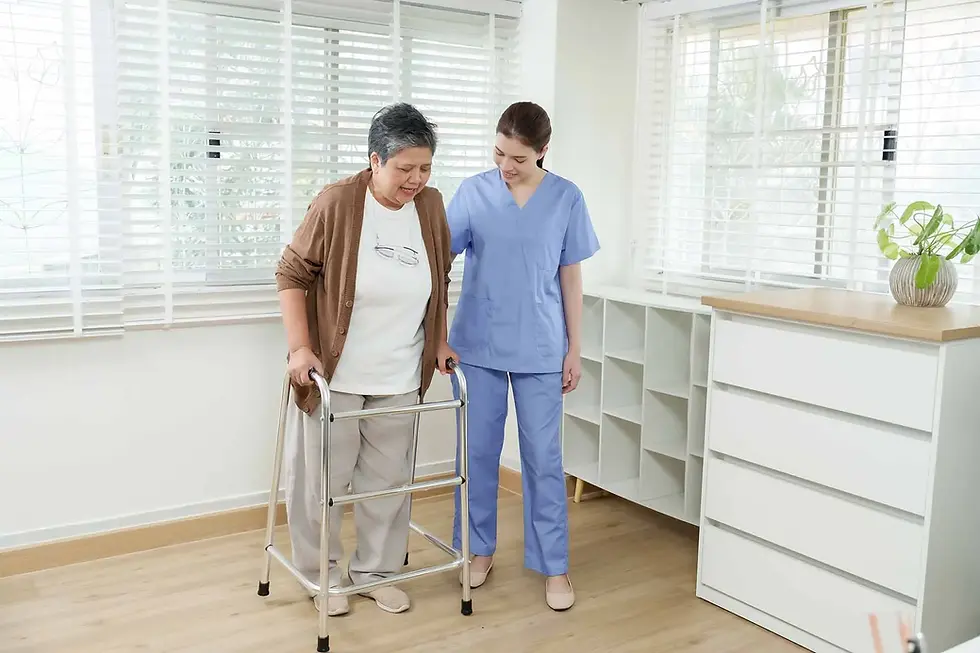
Physiotherapy for Elderly People at Home: Benefits, What to Expect and Who It Helps
- SMARTPHYSIO
- Mar 10
- 6 min read

For many older adults, getting to a clinic is the hardest part of getting help. Whether it is pain, reduced mobility, frailty, or recovery from illness, the journey itself can be a barrier. Home visit physiotherapy removes that barrier entirely, bringing expert clinical assessment and treatment directly to the person who needs it.
This article explains what physiotherapy for elderly people at home involves, who it suits, and what families and older adults can realistically expect.
What is physiotherapy for elderly people at home?
Home Visit Physiotherapy in London is exactly what it sounds like: a qualified physiotherapist comes to your home, assesses you in your own environment, and delivers treatment there. Sessions typically cover movement, strength, balance, pain, and functional goals, all tailored to what the person actually needs to do day to day.
It is not a scaled-back version of clinic care. For many older adults, being assessed at home provides richer clinical information than a clinic visit would, because the physiotherapist can see exactly how the person moves in their real environment, how they manage stairs, how they rise from their chair, and where the practical risks are.
Who is home physiotherapy for?
The short answer is: anyone for whom travelling to a clinic is difficult, unsafe, or impractical. In practice, this often includes people who are:
Recovering after a hospital stay or surgery
Living with neurological conditions such as stroke, Parkinson's disease, or multiple sclerosis
Managing frailty, reduced balance, or a recent fall
Experiencing pain, stiffness, or significant mobility limitations
In the weeks immediately after discharge, when they are not yet stable enough to travel regularly
Living in a care home that would benefit from on-site physiotherapy input
That said, home physiotherapy is not necessarily a permanent arrangement. Some patients start at home and later progress to clinic-based treatment as their function improves. Others may benefit from a combination of both. The right approach depends on the individual, their goals, and how they are progressing.
Our elderly care physiotherapy support covers a broad range of presentations, from post-operative recovery to longer-term conditions affecting independence.
What does a physiotherapist do for the elderly?
A physiotherapist working with older adults carries out a thorough assessment of movement, strength, balance, and functional ability. They then develop a treatment plan based on what matters most to the individual, which varies enormously from patient to patient.
For one person, the goal might be walking to the bathroom safely. For another, it is getting back to community activities, managing stairs independently, or reducing the risk of another fall. The physiotherapist works towards those specific goals rather than applying a generic protocol.
Practically, sessions might include hands-on manual therapy, targeted exercise programmes, balance and gait retraining, advice on safe transfers, and guidance for carers and family members. Environmental risk factors, such as loose rugs, poor lighting, or unsuitable furniture height, are often flagged too.
Falls prevention is a significant part of elderly physiotherapy. Age UK estimates that around one in three adults over 65 falls at least once a year. A physiotherapist can assess why someone is unsteady and address the underlying causes directly.
Can physios come to your home?
Yes. Qualified physiotherapists, including those registered with the Health and Care Professions Council (HCPC), do offer home visits. Private physiotherapy makes this service particularly accessible, with appointments bookable at times that suit the patient and their family.
SMARTPHYSIO provides home visit physiotherapy across London, covering areas including North London, Central London, and the City. This is especially useful for patients who have recently returned home from hospital or who cannot travel reliably.
It is worth knowing that private home visits are arranged directly, without a GP referral in most cases. Families often make the initial enquiry on behalf of a parent or relative, and that is entirely normal. The clinical team will ask relevant questions about the patient's current situation and recommend the most appropriate first step.
What to expect during a home physiotherapy visit
The first appointment is usually longer than subsequent ones. The physiotherapist will take a detailed history, ask about the person's day-to-day function, and carry out a physical assessment. This includes observing how the person moves through their home, not just performing standard clinical tests.
The environment matters. A physiotherapist visiting at home will look at how the person manages specific challenges: getting out of bed, using the bathroom, navigating stairs, sitting and rising from chairs. Walking aids are assessed for appropriateness. If a family member or carer is present, they are included in the conversation where helpful.
From that first visit, a treatment plan is agreed. This sets out realistic goals, the likely number of sessions, and any home exercise programme the patient will be asked to follow between appointments. Progress is reviewed regularly, and the plan is adjusted if circumstances change.
How the home environment shapes treatment
One practical advantage of home visits is that treatment can be adapted precisely to the person's living situation. Exercises can be practised on the actual stairs the patient uses. Transfers can be rehearsed with the patient's own furniture. Advice on equipment, such as grab rails, raised toilet seats, or a different type of walking frame, is given in context, which makes it more useful and more likely to be followed.
When home physiotherapy is the right choice (and when it is not)
For older adults with significant mobility limitations, recent injury or illness, or complex neurological conditions, home physiotherapy is often the most practical and clinically appropriate starting point. It removes the physical and logistical challenge of clinic attendance at a time when the person is at their most vulnerable.
That said, clinic-based physiotherapy has its own advantages. Specialist equipment, more space for gait retraining, and the opportunity to work alongside other clinicians are all easier to access in a clinic setting. As patients improve, moving some or all of their treatment to a clinic can support further progress.
SMARTPHYSIO has four London clinic locations, each of which can provide assessment and ongoing treatment. Our West End physiotherapy clinic is based near Charing Cross Road in Soho. Our Highgate physiotherapy clinic is on Archway Road in North London. Our Hampstead physiotherapy clinic is on Finchley Road, and our City physiotherapy clinic is at Bishopsgate near Liverpool Street.
Many patients move between home and clinic care over the course of their recovery, and that transition is planned carefully.
How do physiotherapists help stroke patients?
After a stroke, the nervous system needs time and targeted input to rebuild movement patterns. Physiotherapy is central to that process. A physiotherapist working in neuro rehabilitation helps stroke survivors retrain motor function, improve transfers, address spasticity, and work towards walking and daily activity goals. Early and consistent input tends to produce better outcomes.
Home physio after stroke has particular value in the weeks following discharge from hospital, when patients are often too fatigued or unstable to travel and yet need regular treatment to maintain recovery momentum. Our neuro physiotherapy in London covers stroke rehabilitation both at home and in clinic, tailored to where the patient is in their recovery.
The NHS acknowledges that rehabilitation after stroke should begin as early as possible and continue as long as the patient is making progress. Our stroke physiotherapy service works alongside that principle, providing consistent and expert input for patients at home and in clinic.
Physiotherapy is also highly relevant to people living with Parkinson's disease. Managing rigidity, improving gait, and reducing falls risk are all areas where regular physiotherapy input makes a measurable difference. Our Parkinson's physiotherapy service is available through home visits or at any of our London clinics.
Arrange Home Physiotherapy Support in London
Physiotherapy at home can help elderly people improve mobility, reduce fall risk, regain confidence, and maintain independence where they feel most comfortable. Whether the need arises after surgery, hospital discharge, a stroke, or a gradual decline in function, early and well-targeted physiotherapy makes a real difference.
SMARTPHYSIO provides experienced Home Visit Physiotherapy in London, alongside specialist support in neuro physiotherapy, elderly care, and post-surgery rehabilitation. If you are looking for support for a parent, partner, or relative, our team is happy to discuss what would be most appropriate for their situation. Contact us to arrange an initial assessment.
Frequently Asked Questions (FAQs)
What conditions can home physiotherapy treat in elderly people?
Home physiotherapy can address a wide range of conditions, including stroke recovery, Parkinson's disease, post-surgical rehabilitation, frailty, falls and balance problems, arthritis, joint pain, reduced mobility, and general deconditioning after illness or a hospital stay.
Do private physiotherapists do home visits in London?
Yes. Private physiotherapists can visit patients at home, and no GP referral is usually required. SMARTPHYSIO offers home visit physiotherapy across London, with appointments arranged directly and timed to suit the patient and their family.
How is a home physiotherapy session different from a clinic appointment?
A home visit allows the physiotherapist to assess the patient in their actual living environment, including how they manage stairs, furniture, and daily tasks. Treatment can be adapted to that environment specifically, which is often more practical and more useful than exercises practised in a clinic setting.
How soon after a stroke or surgery should physiotherapy begin?
Early intervention tends to produce better outcomes. After a stroke, physiotherapy should ideally begin while the patient is still in hospital and continue after discharge. Following surgery, a physiotherapist can guide safe movement and rehabilitation from the first days at home, supporting recovery and reducing the risk of complications.