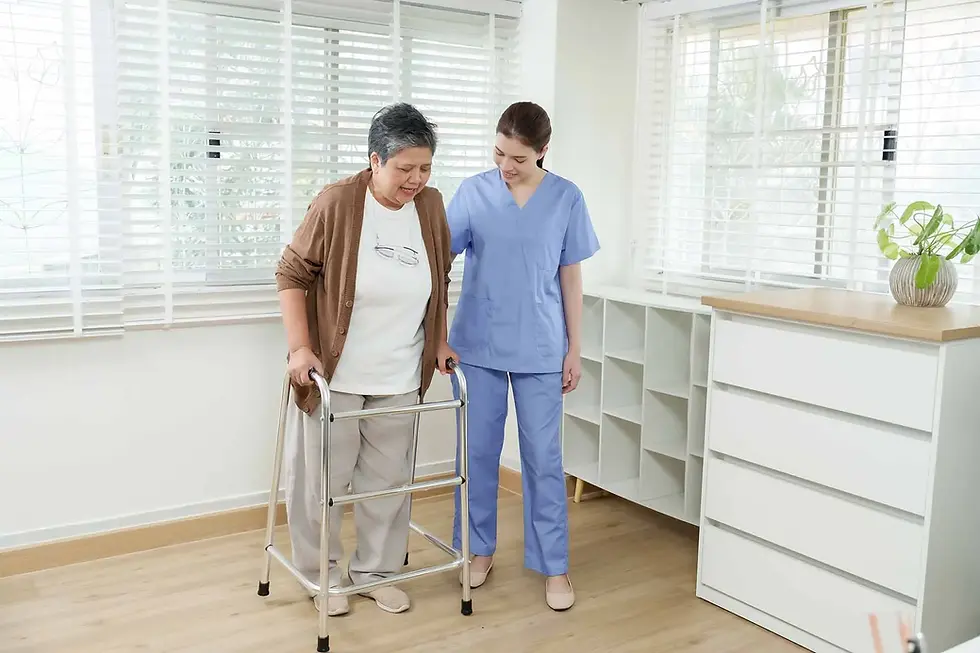
PHYSIOTHERAPY HOME VISITS FOR FRAILTY
- SMARTPHYSIO
- May 21, 2023
- 2 min read
Updated: Dec 15, 2025

Physiotherapy home visits, especially when approached from a functional perspective, can be highly beneficial for the aging population and hold promise for the future. Here are several reasons why they make sense:
Accessibility and convenience: Ageing individuals often face mobility challenges, making it difficult for them to travel to a clinic or hospital. Physiotherapy home visits eliminate this barrier by bringing the necessary care directly to their doorstep. It saves them from the physical exertion and potential risks associated with transportation.
Personalised and patient-centered care: In-home physiotherapy allows therapists to assess the individual's living environment, identify specific challenges, and tailor treatment plans accordingly. By considering the person's unique needs and goals within their own home, therapists can design interventions that directly address their functional limitations and enhance their independence.
Functional approach: The functional approach in physiotherapy focuses on improving a person's ability to perform daily activities and enhancing their overall quality of life. Home visits provide therapists with a comprehensive understanding of the individual's functional limitations and enable them to develop treatment strategies that align with the person's home environment and activities of daily living.
Fall prevention and safety: Falls are a significant concern among the aging population. By conducting home visits, physiotherapists can evaluate potential fall hazards within the person's home and recommend necessary modifications to enhance safety. They can also prescribe exercises and interventions that specifically target balance, strength, and mobility, reducing the risk of falls and related injuries.
Continuity of care: For individuals with chronic conditions or complex care needs, continuity of care is crucial. Home visits ensure regular follow-ups and ongoing monitoring of the person's progress. It also allows the physiotherapist to collaborate with other healthcare professionals involved in the individual's care, fostering a multidisciplinary and holistic approach to their well-being.
Cost-effectiveness: Physiotherapy home visits can potentially reduce healthcare costs by preventing hospital readmissions, minimizing the need for emergency services due to falls or functional decline, and promoting independent living. By addressing functional limitations in a familiar environment, the overall healthcare expenditure can be optimised.
Future implications: With the ageing population expected to grow in the future, the demand for healthcare services will increase. Physiotherapy home visits align with the concept of ageing in place, where individuals can maintain their independence and stay in their own homes for as long as possible. Embracing this approach can help alleviate the burden on healthcare systems and improve the overall well-being and quality of life for the ageing population.
In conclusion, physiotherapy home visits with a functional approach offer numerous advantages for the ageing population and hold significant promise for the future. By addressing specific functional limitations, promoting safety, and providing personalised care in the home environment, physiotherapists can enhance the independence, well-being, and overall quality of life for older adults.