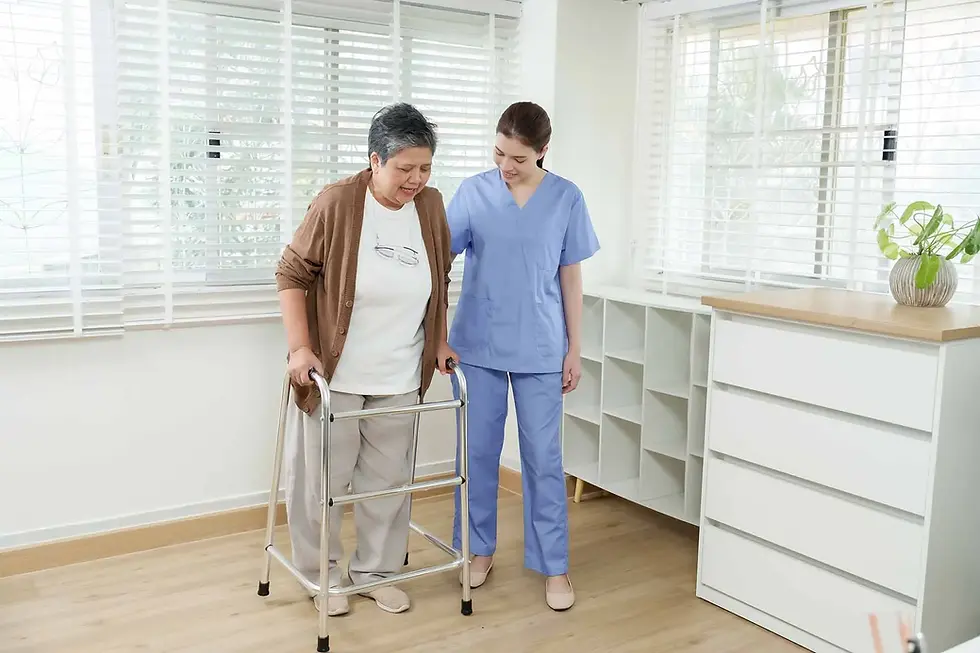
What Patients Don’t Realise About Home Physiotherapy
- SMARTPHYSIO
- Jan 29
- 3 min read
Updated: Apr 21

A Physiotherapist’s View Behind The Scenes
Physiotherapy is often associated with clinics, treatment tables and exercises guided in a gym‑like setting. But for many people, especially those with mobility issues, chronic conditions or recovering after surgery, home visit physiotherapy can be a game‑changer. At SMARTPHYSIO, we’ve delivered hundreds of treatment plans in people’s own homes, and what we repeatedly see is that there’s far more to a visit than patients initially expect.
This article explores what really happens during a home visit, why it can enhance recovery, and what makes home‑based care so uniquely effective.
A Realistic Environment Makes All The Difference
One of the biggest misconceptions about home physiotherapy is that it is simply “clinic treatment delivered at home”. In reality, your home environment gives your physiotherapist valuable insight into how you move in daily life.
When a therapist sees you get up from your favourite chair, walk down the hallway or negotiate a step, they observe subtle movement patterns that might never appear in a clinic. These real‑world observations help them tailor exercises and advice specifically to your context, whether that’s navigating a narrow hallway, stepping over rugs, or managing around furniture.
Working within your own space also allows the therapist to suggest small environmental changes that reduce risk and support your goals. For example, adjusting the position of a chair to make sit‑to‑stand transitions easier or recommending a safer route around the home for walking practice.
It’s Much More Than “Doing Exercises”
It’s common for patients to think a physiotherapy session is mostly about performing a set of exercises. While exercises are important, home visits are deliberately much broader than that.
During a session, your physiotherapist might:
Assess how you rise from a seated position
Watch you climb stairs or put on shoes
Look at how you use handrails or assistive devices
Discuss your daily routines, including challenges and goals
Identify subtle movement habits that could be slowing recovery or increasing discomfort
This holistic picture helps therapists develop plans that fit you, not just a generic programme but a strategy that works in your everyday life.
Confidence And Comfort Matter During Recovery
Being treated in your own home often eases anxiety and increases engagement. Some people find travel to a clinic exhausting or daunting, especially if they use walking aids or have been recently discharged from hospital. Removing the stress of transport means patients can focus more fully on the session itself.
Clinicians also report that patients open up about their goals more readily in a familiar space. Whether that’s walking to the kitchen without stopping, climbing stairs safely or simply being able to play with grandchildren, sharing these personal aims helps therapists design truly meaningful programmes.
Families And Carers Play A Bigger Part
Another benefit home physio brings is the opportunity to involve family members or carers in the rehabilitation process. At SMARTPHYSIO we often show relatives how to assist safely with transfers, how to set up walking practice areas, and how to encourage consistency with home exercises.
This not only boosts confidence in carers but reinforces a supportive recovery environment that extends beyond the appointment itself.
Follow‑Up And Consistency Are Key
A single visit establishes a baseline, but ongoing home visits build momentum. With each appointment, your physiotherapist will review progress, adjust exercises, and introduce new challenges at just the right pace. This steady progression is often what separates “temporary improvement” from lasting functional gains.
How We Can Help with Home Physiotherapy
Home physiotherapy offers a practical and personalised approach to rehabilitation by supporting recovery in the environment where daily life happens. We provide expert care through home visit physiotherapy, physiotherapy, and treatment for neurological conditions, including support for people living with Parkinson’s and recovering from stroke. If you would like to discuss whether home physiotherapy is right for you or a loved one, contact the team today to arrange an appointment.