

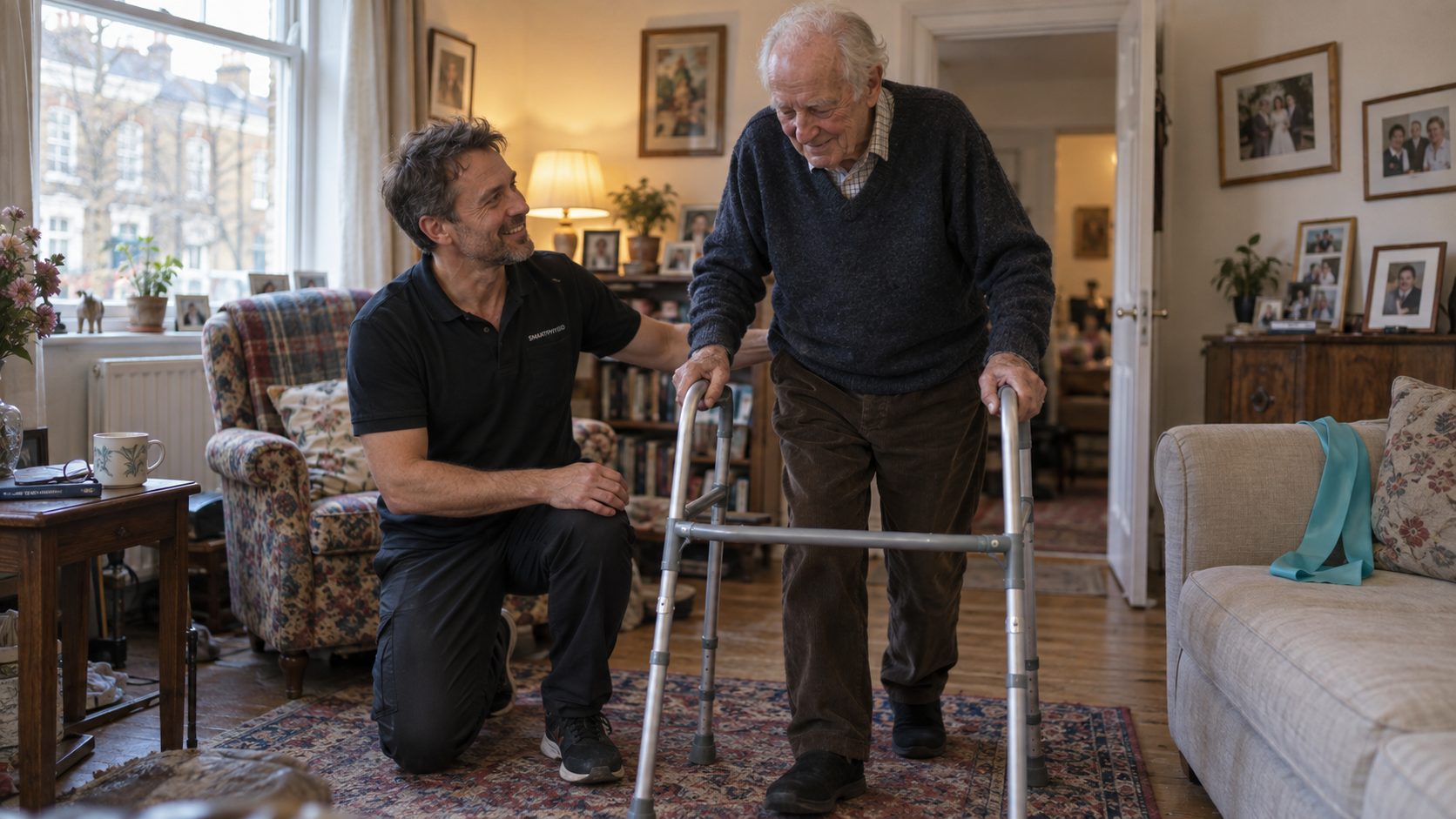
Physiotherapy for balance and fall prevention


I'm reflecting on how often we take our balance for granted – until something goes wrong. In my years as a physiotherapist, I've seen countless patients whose lives have been dramatically altered by balance problems, from minor wobbles to life-changing falls.
Balance: more than just standing still
Balance isn't simply about not falling over. It's a remarkably sophisticated system involving your inner ear (vestibular system), vision, proprioception (your body's awareness of its position), and muscle strength working in perfect harmony. When any component falters, the entire system can become compromised.
Falls are the leading cause of injury-related death in adults over 65 in the UK, yet balance problems affect people of all ages. From athletes recovering from ankle sprains to office workers experiencing dizziness, balance issues are far more common than many realise.
The evidence behind balance training
Research consistently demonstrates that targeted balance training can significantly reduce fall risk and improve quality of life. A systematic review published in the Cochrane Database found that exercise programmes focusing on balance can reduce falls by up to 24% in older adults.
What's particularly encouraging is how responsive our balance systems are to training. Studies show improvements can begin within just a few weeks of consistent practice. The key is progressive, challenging exercises that safely push your balance boundaries.
Common balance challenges
In practice, I frequently encounter:
Vestibular disorders – including BPPV (benign paroxysmal positional vertigo), which affects 1 in 6 people at some point
Post-injury balance deficits – particularly following ankle sprains or head injuries
Age-related changes – gradual decline in reaction times and proprioception
Medication side effects – certain prescriptions can affect balance and spatial awareness
Simple steps, significant impact
The beauty of balance training lies in its accessibility. Evidence-based exercises don't require expensive equipment or gym memberships. Simple activities like single-leg stands, heel-to-toe walking, or standing on unstable surfaces can yield remarkable improvements.
However, it's crucial to progress safely. What feels easy one day might be challenging the next, and individual needs vary enormously. Professional guidance ensures exercises are appropriately challenging without being dangerous.
Beyond fall prevention
Improved balance extends far beyond preventing falls. Patients regularly report increased confidence in daily activities, better sports performance, reduced anxiety around movement, and enhanced overall quality of life. Balance training can be genuinely transformative.
A call to action
I encourage everyone to consider their balance health. Simple self-assessments, like timing how long you can stand on one leg with eyes closed, can provide valuable insights into your current status.
Don't wait for problems to develop. Proactive balance training is one of the most effective investments you can make in your long-term mobility and independence.
How we can help
If you're struggling with balance, experiencing dizziness or want to reduce your risk of falls, contact us or book a clinic appointment today.


Let's get you moving again
Book a clinic appointment online, or tell us about a home visit and we will call you back the same working day.