

Cycle to Work Day: Why Your Body Will Thank You (And What the Research Really Says)


As we celebrate Cycle to Work Day, I find myself reflecting on the countless patients I've treated over the years who've discovered the transformative power of cycling. Whilst I'm not here to wave pom-poms for any particular mode of transport, the evidence supporting cycling as both commute and medicine is genuinely compelling.
The Science Behind the Saddle
Research consistently demonstrates that regular cycling delivers remarkable health benefits. A landmark study published in the BMJ followed over 260,000 individuals for five years and found that cycling to work was associated with a 45% lower risk of developing cancer and a 46% lower risk of cardiovascular disease. These aren't marginal gains. They're life-changing statistics.
From a musculoskeletal perspective, cycling offers unique advantages. Unlike high-impact activities, it provides excellent cardiovascular conditioning whilst being remarkably joint-friendly. The closed-chain nature of pedalling helps strengthen the quadriceps, glutes, and calves without the repetitive stress that running places on knees and ankles.
Common Concerns I Hear in Clinic
"But what about my back?" is perhaps the most frequent question I encounter. Here's the thing: poor bike fit causes problems, not cycling itself. A properly adjusted bicycle should feel comfortable, not like a medieval torture device. Your local cycle shop can work wonders: think of it as physio for your bike.
Neck and shoulder tension? Usually stems from gripping the handlebars like you're wrestling a python. Relax those shoulders, engage your core, and let the bike do the work.
Starting Sensibly
The beauty of cycling lies in its scalability. You needn't transform into a lycra-clad speed demon overnight. Begin with shorter distances, perhaps cycling just one or two days per week initially. Your body needs time to adapt: tendons, ligaments, and muscles all require a gradual introduction to new demands.
Consider the hybrid approach: cycle to the train station, or perhaps just partway to work. Every pedal stroke counts, and consistency trumps intensity every time.
The Mental Health Bonus
Whilst the physical benefits grab headlines, don't overlook cycling's impact on mental wellbeing. The combination of fresh air, gentle exercise, and that peculiar meditative quality of rhythmic pedalling creates a powerful antidote to modern stress. Many of my patients report arriving at work feeling more energised and mentally clear after their cycle commute.
A Final Thought
As physiotherapists, we often see people when movement has become painful or difficult. Cycling represents something beautifully preventative: a chance to invest in your future mobility and health. It's not about being the fastest or fittest; it's about moving your body regularly and enjoyably.
This Cycle to Work Day, perhaps consider giving it a go. Your joints, heart, and mind might just surprise you with their enthusiasm.
How We Can Help With Cycling, Mobility, and Physiotherapy
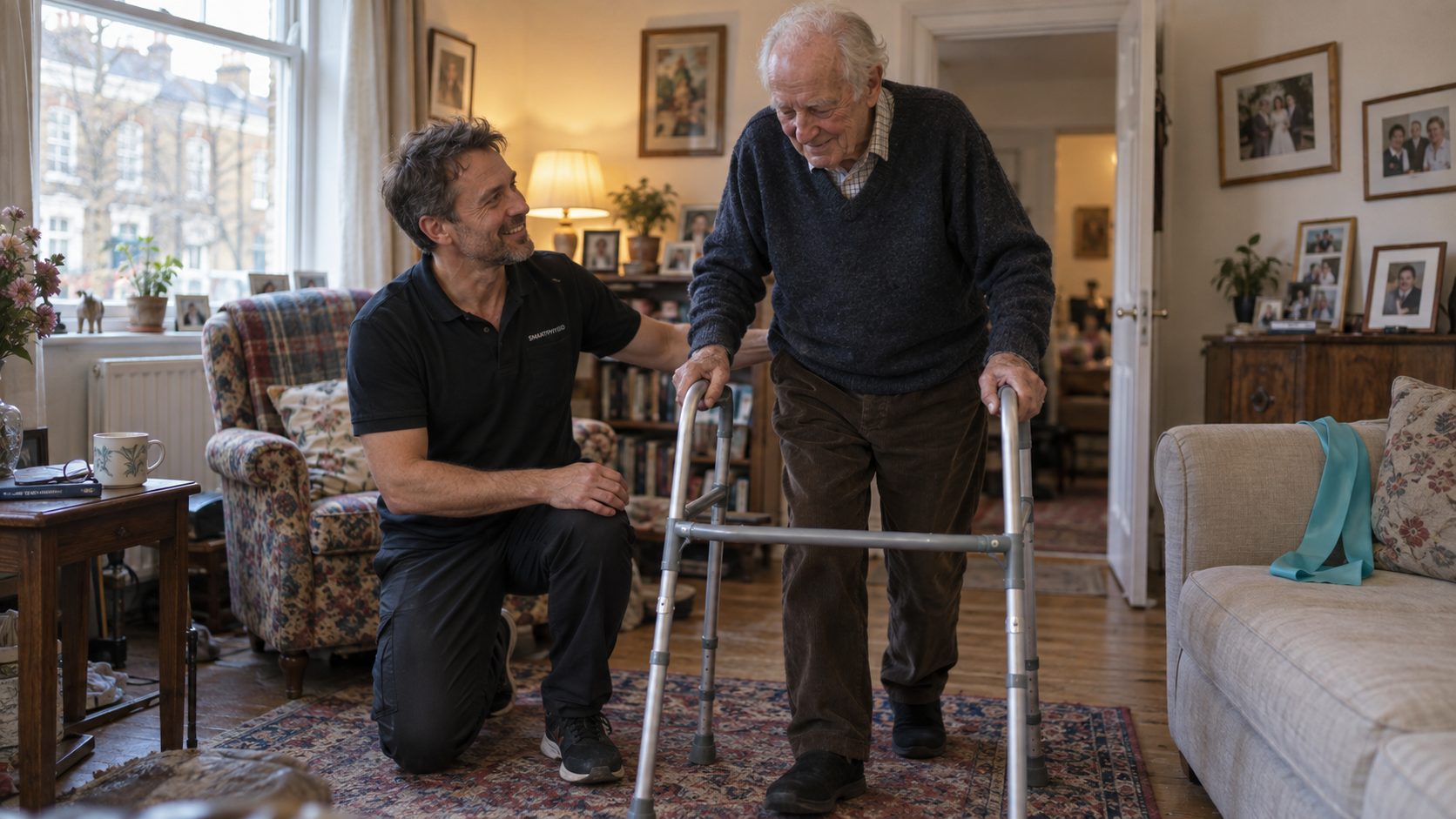
To find out how we can support movement, joint health, and injury prevention through physiotherapy services in London, including advice for cycling-related aches and pains and home visit physiotherapy, contact SMARTPHYSIO to discuss the most appropriate support for you.
More from the SMARTPHYSIO blog


Let's get you moving again
Book a clinic appointment online, or tell us about a home visit and we will call you back the same working day.